Soundproofing stops noise getting in or out. Acoustic treatment stops the echo inside. They need different materials and very different budgets. Here is what each costs, what works, and what to skip.
Updated November 2026 · Prices checked 2 November 2026
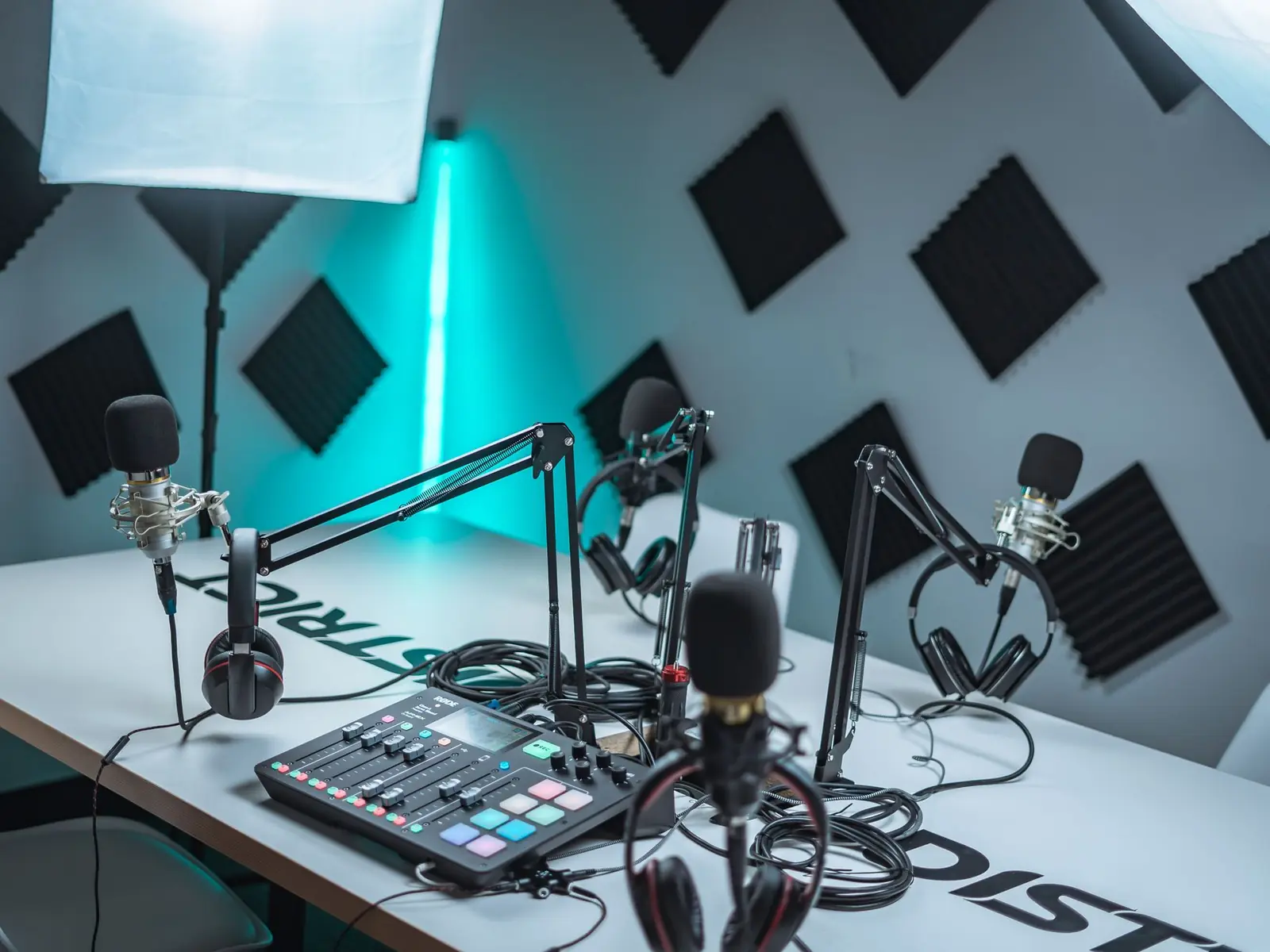
Stock photo
Soundproofing and acoustic treatment are different jobs. Soundproofing stops sound getting in or out. It needs mass, airtight seals and separate layers, which usually means civil work, so it is the expensive part. Acoustic treatment stops echo inside the room with thick panels, bass traps and rugs. It needs no civil work and costs far less.
What it costs with us: treatment is a line inside our room plans. The Essential plan (equipment ₹8.79 L for a full two-camera studio) includes six four-inch broadband absorbers, door seals and a rug. Advanced (₹15.52 L) treats the whole room. Civil soundproofing is not in our quotes. Your interior or civil contractor prices it and builds it to our spec.
Many guides mix these two up. So people cover a wall in foam and still hear the traffic. Or they rebuild a wall when the real problem was echo.
Soundproofing, also called sound isolation, works on three rules.
Treatment does not stop outside noise. In a bare room your voice bounces off hard walls, floor and ceiling and back into the mic. That is the hollow sound of bad office recordings. Panels, bass traps, rugs and curtains soak up those bounces.
Not a sealed box. Good treatment, plus a few targeted fixes: door seals, a solid door, the window and the AC. Go further only if loud noise still gets in. Our podcast studio setup guide shows the full room, and studio setup explains how we build one.
| Soundproofing (isolation) | Acoustic treatment | |
|---|---|---|
| What it fixes | Noise getting in or out: traffic, the next meeting room, a lift, a generator | Echo and boom inside the room |
| Materials | Mass and seals: dense walls, double board layers, solid doors, gaskets, better windows, isolated ceilings | Soft, porous material: thick broadband panels, bass traps, a ceiling cloud, rugs, curtains |
| Civil work? | Usually yes | No |
| Relative cost | High. The biggest cost in a quiet room. | Low to moderate |
| Who does it | Your interior or civil contractor, to a written spec | You, with a good guide, or us as part of a studio build |
We do not publish a per-square-foot price for soundproofing. Two rooms of the same size can need very different work. One faces a garden. The other faces a main road. These are the things that set the cost:
In relative terms: seals, rugs and curtains are cheap. A solid door and proper panels cost more. New windows cost more again. Rebuilding the walls and ceiling as a separate shell costs the most by far, and it takes space and height from the room.
Tell us the room size, what is behind each wall, and what you will record. We will tell you what to fix first. Send us your room, or price the studio gear first.
Stand in the middle and clap once, sharply. A quick, dead sound is good. A ring or a fluttery buzz means echo. That is a treatment job.
Sit where you will record and talk into the mic. Play it back. If your voice sounds hollow or boxy, the room needs treatment.
Stay still and record 30 seconds of nothing. Listen on headphones. Hum, fans, traffic and corridor voices all show up.
Room EQ Wizard (REW) is free software. With a measurement mic and a speaker, it shows how long sound hangs in the room. Optional.
Test at the time of day you plan to record. Noise from outside is an isolation job. If you use REW, measure before and after treatment.
Start at the top. Test after each step. Many rooms are good enough before the end.
If loud noise still gets in, you need building work:
We write down what each surface needs. Your contractor prices and builds it, before the panels and gear go in.
Panels work best in a few exact spots. Covering every wall is not the goal.
Your voice hits the nearest walls and bounces into the mic a moment later. Those first-reflection points matter most. Sit in the chair where people speak. Ask a friend to slide a mirror flat along the side wall. Wherever you can see the mic in the mirror, mark the spot. Do both side walls and the ceiling, for each chair.
In a podcast, each mic points at a person. The wall behind that person sits right in front of the mic. Put a panel there.
A panel hung flat above the table stops sound bouncing between table and ceiling. In a low room it often makes a clear difference.
Deep sound builds up in corners and makes voices boomy. Thick absorbers in the corners, floor to ceiling if you can, calm it down.
Use broadband panels about four inches thick, made of mineral wool or dense fibre wrapped in fabric. They soak up deep sound as well as high. Thin foam only catches the highest sounds. A small air gap behind a panel helps it work lower down. If a seller cannot say what is inside, skip it.
Our Essential plan uses six four-inch panels, a good start for a small two-person room. Bigger rooms and glass rooms need more. At home? OneProGear's bedroom acoustic treatment guide walks through it step by step (OneProGear is our own gear store), and our home studio setup page covers the rest of the room.
One rule clears up most of the myths. Mass blocks sound. Soft, porous material absorbs it. A heavy wall, a solid door and good seals stop noise passing through. Thick panels, rugs and curtains stop echo. Neither one does the other's job.
They soak up a little of the high, hissy part of sound. They do little for deep sound, so the room can still sound boxy and boomy. And they block nothing. Foam is light. Traffic goes straight through it.
Thermocol is very light, so it barely blocks sound. It does not soak up much echo either. And it burns. Skip it.
Egg trays do not soundproof. They weigh almost nothing, so they cannot block noise, and they soak up very little echo. They also gather dust and catch fire easily.
The worst case. Glass reflects almost everything and lets voices in. Draw heavy curtains when you record, panel the solid walls, add a ceiling cloud.
Office walls often stop at the false ceiling. Sound from next door travels over the top. Close the gaps, or take the wall up to the slab.
The indoor unit's fan is in the room, and ducts can carry sound from other rooms. Switch off during takes and seal the pipe hole.
Lift motors, footsteps and chatter come through walls and doors. Pick a room away from the lift and pantry, and seal the door.
Horns and engine rumble come through the glass. Deep rumble is the hardest sound to block. Pick the quiet side of the building, or plan a better window.
Vitrified tiles bounce sound straight back up. A dense rug under the table is cheap, and it works.
Filming too? Our YouTube studio setup page covers the camera and light side.
Our plans are full studios, with treatment as one line inside. Full gear lists are on the packages page.
| Option | Who it suits | What you get | Price |
|---|---|---|---|
| Quick fixes | Any room, today | Door and window seals, a thick rug, heavy curtains, fans and AC off during takes | Lowest. Hardware-shop items. |
| DIY treatment OneProGear acoustic treatment | A home studio or a small one-person room | Panels, bass traps and door seals you fit yourself, using the bedroom guide | Priced per item on the live page. You choose how many. |
| Onewrk Essential | A company podcast or video room, two cameras | Six four-inch broadband absorbers, door seals and a dense rug, placed by us, in a full two-camera studio | Equipment ₹8.79 L for the whole studio. About ₹10.11 L all in. |
| Onewrk Advanced | A room used every week, three cameras | Full-room treatment in a three-camera studio where each camera records on its own | Equipment ₹15.52 L for the whole studio. About ₹17.85 L all in. |
| Civil isolation | Rooms where outside noise must be blocked | Wall, door, window, ceiling and AC work by your interior or civil contractor, to our spec | Priced after a site visit |
Onewrk figures are September 2026 equipment prices, usually right within 5 to 10 percent; firm price after we see the room. Setup is about 10 percent extra, training about 5 percent. Not included: GST, freight, wiring, civil work (including all soundproofing construction), and travel outside Bengaluru. OneProGear prices include GST and are as listed on 2 November 2026; check the live page.
Good for a home studio or one small room. Follow the bedroom guide, then buy panels and bass traps from OneProGear, our own gear store. Genuine, new, India warranty, GST invoice on every order.
Its free Studio Planner turns your room size and furniture into a layout and gear list. Need mics too? Podcast studio kits start at ₹24,770 for one person.
Good for a company room you film in every week. We test the room, plan every panel, and fit the treatment with the cameras, lights and sound. We write the spec for any building work. Then we train your team.
Treatment is in every plan. See the plans or send us your room.
Onewrk is two partners in Bengaluru. Kishore T builds and fits the studios. Nikhil Bhansali handles strategy, audits, consulting and training. There are no account managers. We publish our gear lists and prices, so you can check us before you call.
We install across India from Bengaluru. Travel and stay outside Bengaluru cost extra. In the US, UK and Australia we work by remote consultation: a room check on video, a local gear list with wiring and sound diagrams, and live calls while you set up. Already posting videos? Ask us for a free private review of your channel.
Tell us the size, what is behind each wall, and what you will record. We will send a costed plan.
Get my room planTell us the room size, what is next to it and what you will record. We reply in one working day. No sales deck.
Prefer to pick a time? Book a call directly.